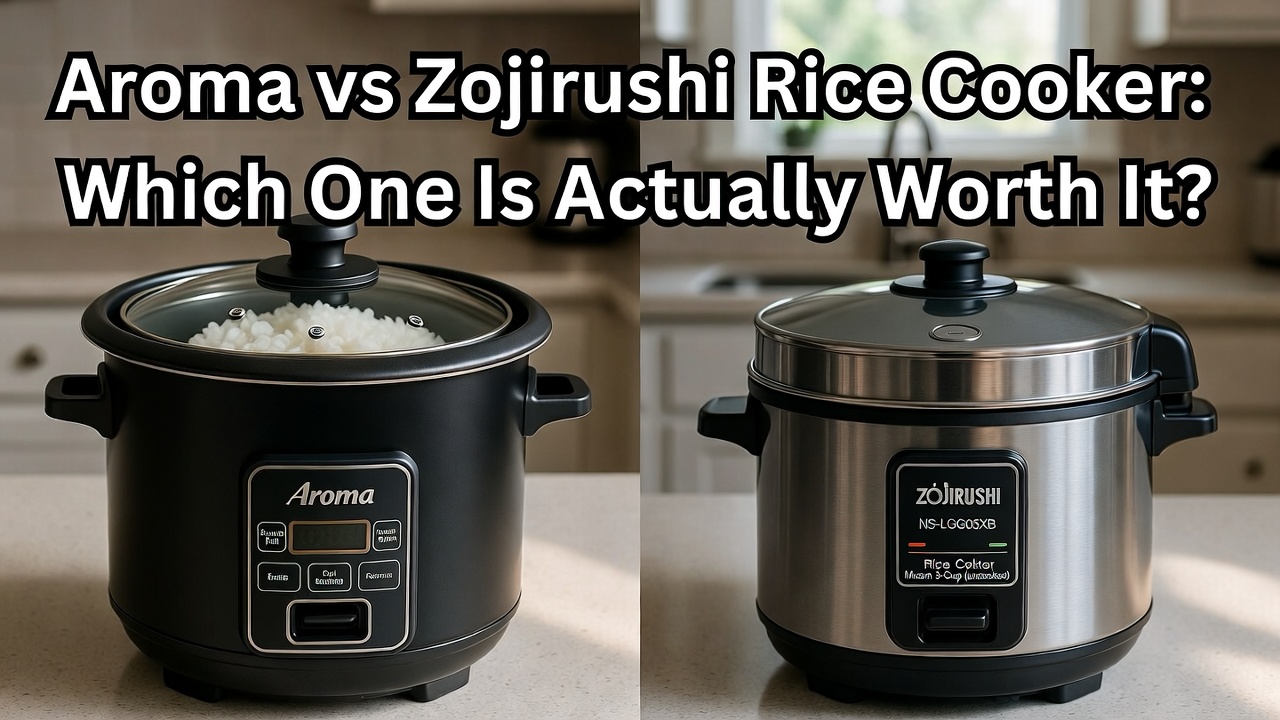
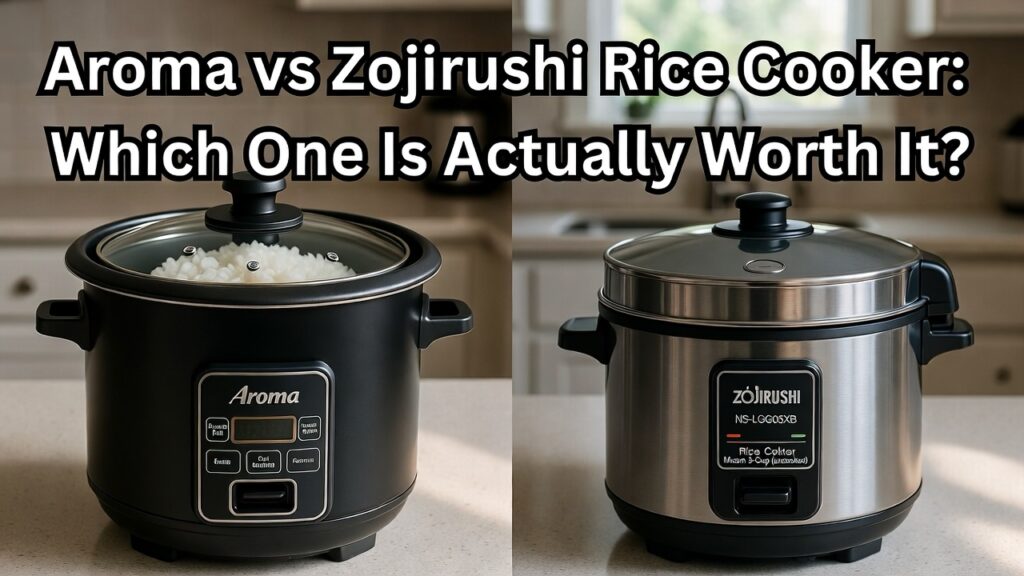
Aroma vs Zojirushi Rice Cooker: Which One Is Actually Worth It?
Choosing between Aroma and Zojirushi looks simple at first.
One is cheaper. One is more expensive.
But that is not the real decision.
The real decision is this: which rice cooker fixes the problem you actually have in your kitchen?
Maybe your rice keeps coming out mushy. Maybe the bottom gets dry, hard, or slightly burnt. Maybe you want a simple cooker but do not want to waste money on features you will never use. Maybe you cook rice every day and are tired of guessing water levels. Or maybe you do not like the idea of a nonstick-coated inner pot and want stainless steel instead.
That is why the Aroma vs Zojirushi rice cooker debate is not only about price.
Aroma is better for people who want simple rice without spending much. Some Aroma models also appeal to buyers who want a stainless steel inner pot.
Zojirushi is better for people who cook rice often and want more consistent texture, better timers, and fewer bad batches.
So the question is not, “Which brand is better?”
The better question is:
Which one solves your rice problem better?
Quick Answer: Aroma vs Zojirushi
If your main problem is price, choose Aroma.
If your main problem is rice texture, choose Zojirushi.
If your main problem is nonstick coating, look at Aroma stainless steel models.
If your main problem is daily rice cooking, Zojirushi is usually the better long-term choice.
| Your Main Problem | Better Choice | Why |
|---|---|---|
| You want a cheaper rice cooker | Aroma | Lower price and simple use |
| You want stainless steel | Aroma Select Stainless | Stainless steel inner pot options |
| Your rice comes out uneven | Zojirushi | Better cooking control |
| You cook rice every day | Zojirushi | More consistent for regular use |
| You cook brown rice often | Zojirushi | Better suited for harder rice types |
| You only cook rice sometimes | Aroma | No need to overpay |
| You need rice faster | Aroma | Usually quicker than Zojirushi |
| You want timer features | Zojirushi | Better scheduling convenience |
| You hate overpaying for appliances | Aroma | Better budget value |
| You hate bad rice more than high price | Zojirushi | Better texture and consistency |
Price: Aroma Makes More Sense If You Do Not Want to Overpay
Aroma’s biggest advantage is obvious: it costs less.
That matters.
Not everyone needs a premium rice cooker. If you are a student, living in a small apartment, buying your first rice cooker, or only cooking rice a few times a week, spending premium money may not feel worth it.
Aroma is built for the buyer who wants rice to be easier without turning the purchase into a major decision.
You want to stop burning rice on the stove. You want a simple machine. You want rice, maybe some steamed vegetables, and a warm setting. You do not want to study cooking technology before dinner.
That is where Aroma fits well.
It is not trying to be the most advanced rice cooker in the world. It is trying to be useful, cheap enough to justify, and simple enough for everyday people.
For many buyers, that is enough.
Rice Quality: Zojirushi Is Better If Bad Rice Bothers You
Zojirushi’s biggest advantage is consistency.
A cheap rice cooker can make good rice. The issue is not always the best batch. The issue is the bad batch.
One day the rice is fine. Another day it is too wet. Another day the bottom is dry. Brown rice comes out chewy in the wrong way. Sushi rice turns too sticky. You start changing the water level every time and still do not fully trust the result.
That gets annoying if you eat rice often.
In one detailed rice cooker test, more than 50 batches of rice were cooked across eight popular rice cookers. Aroma performed well with medium and larger batches of white rice, and its brown rice came out tender with separated grains. But its one-cup white rice batch was wet and slightly mushy, and the sushi rice was too wet and sticky.
Zojirushi performed better with medium and large white rice batches in that same test. The tester also liked its smoother lid, clearer water markings, removable inner lid, retractable cord, and pot handles. The main downsides were price and slow cook time.
That is the real trade-off.
Aroma can cook good rice.
Zojirushi gives you a better chance of getting good rice more often.
If rice is an occasional side dish, Aroma may be fine. If rice is part of your normal meals, Zojirushi’s consistency becomes more valuable.
See more: The 10 Best Zojirushi Rice Cookers For 2026
Stainless Steel vs Nonstick: Aroma Has a Real Advantage for Some Buyers
This is one of the biggest reasons some people choose Aroma over Zojirushi.
Many Zojirushi rice cookers use nonstick inner pots. That makes cleanup easier and helps rice release better. But not everyone wants nonstick coating touching their food.
Some buyers worry about scratches. Some worry about coating wear. Some do not want to baby the pot with special utensils. Some simply prefer stainless steel because it feels simpler and more durable.
That is where Aroma’s stainless steel models become interesting.
Aroma Select Stainless models are made for people who want a basic rice cooker with a stainless steel inner pot. For buyers who care about avoiding nonstick coating, that can matter more than fuzzy logic, timers, or premium branding.
But stainless steel has a downside.
Rice can stick more easily. Cleanup may take more work. If you let the rice sit too long, starch can dry onto the pot and become annoying to scrub.
So this is not a perfect win for Aroma. It is a trade.
Choose Aroma stainless steel if your main worry is cooking surface material.
Choose Zojirushi nonstick if your main worry is easy rice release and cleanup.
Both choices make sense. It depends on what bothers you more.
Brown Rice and Sushi Rice: Zojirushi Is the Safer Pick
White rice is easier.
Brown rice and sushi rice are where rice cookers start to show their weaknesses.
Brown rice needs more time and better water control. Sushi rice needs the right sticky texture without becoming wet and mushy. If your cooker is too basic, these rice types may need more trial and error.
Aroma can still work, especially if you mostly cook normal white rice or medium batches. But testing shows it can struggle more with tiny batches and sushi rice.
Zojirushi has the edge because it is made for more controlled cooking. Its premium models often include more rice-specific settings, better timers, and smarter heat adjustment.
Another side-by-side test compared Aroma, Instant Pot, and Zojirushi with white and brown rice. Aroma was described as cheap, simple, and good enough, but the reviewer preferred Zojirushi for rice texture, especially brown rice. Zojirushi took close to an hour, while Aroma finished around 30 minutes.
So if you mostly cook white rice, Aroma is likely enough.
If you cook brown rice, sushi rice, mixed rice, or different rice types often, Zojirushi is the safer choice.
Speed: Aroma Is Better When You Need Rice Sooner
Zojirushi is not usually the fast choice.
That does not make it bad. Slower cooking can help rice texture. But real life is not always calm and planned.
Sometimes you forget to start dinner. Sometimes everyone is hungry. Sometimes you need rice in 30 minutes, not close to an hour.
In the Aroma, Instant Pot, and Zojirushi comparison, Instant Pot finished around 20 minutes, Aroma around 30 minutes, and Zojirushi took close to an hour. The reviewer still liked Zojirushi’s rice better, but Aroma was clearly faster than Zojirushi in that test.
This is where Aroma feels practical.
It may not give the most refined rice, but it gets dinner moving faster.
If your pain point is time, Aroma may fit your life better.
If your pain point is texture, Zojirushi may be worth the wait.
Timer Features: Zojirushi Is Better for Routine
There is a big difference between cooking rice sometimes and cooking rice as part of your routine.
If rice is a regular part of your meals, timer features matter.
You can set rice for breakfast. You can set rice before work. You can have it ready when you get home. You can keep rice warm for family members eating at different times.
That kind of convenience does not feel important until you use it.
Then it becomes hard to give up.
Zojirushi is stronger here. It is built more like a daily-use appliance, not just a basic rice cooker.
Aroma is simple. That is its strength.
Zojirushi is more polished. That is its strength.
For occasional rice, Aroma is easier to justify.
For daily rice, Zojirushi’s features start to feel less like extras and more like relief.
Cleaning: Pick the Annoyance You Hate Less
Cleaning is where the stainless steel vs nonstick decision becomes real.
A stainless steel pot may feel better if you want to avoid coating. But rice can stick. You may need to rinse more carefully, use the right amount of water, and clean the pot before the starch dries.
A nonstick pot is easier for rice release. But you need to avoid scratching it and treat it with more care.
So ask yourself this:
Would you rather deal with possible sticking, or would you rather deal with protecting a nonstick surface?
There is no perfect answer.
Aroma stainless steel is better for coating concerns.
Zojirushi nonstick is better for convenience.
The best choice depends on which problem bothers you more after dinner.
Aroma vs Zojirushi: Full Comparison
| Feature | Aroma | Zojirushi |
|---|---|---|
| Main strength | Affordable and simple | Consistent and polished |
| Best for | Casual rice eaters | Daily rice eaters |
| Biggest pain solved | Spending too much | Inconsistent rice |
| Inner pot | Stainless steel options available | Usually nonstick |
| White rice | Good in normal batches | More consistent |
| Brown rice | Decent, may need tweaking | Better controlled |
| Sushi rice | Can be too wet or sticky | Better texture control |
| Cook time | Usually faster | Usually slower |
| Timer features | Basic or limited | Stronger |
| Cleaning | Stainless steel may stick | Nonstick easier, but needs care |
| Best value | Budget kitchens | Rice-heavy households |
Who Should Buy Aroma?
Buy Aroma if you want a rice cooker that solves a simple problem without creating a new money problem.
Aroma makes sense if:
- you are on a budget
- you mostly cook white rice
- you only cook rice sometimes
- you want a first rice cooker
- you live in a dorm or small apartment
- you do not need advanced settings
- you want a stainless steel inner pot option
- you usually cook fresh rice and finish it the same day
Aroma is also a good first step if you are not sure how often you will use a rice cooker. Start simple. If rice becomes part of your daily routine later, you can upgrade.
Who Should Buy Zojirushi?
Buy Zojirushi if rice is part of your normal life.
Zojirushi makes sense if:
- you eat rice daily or several times a week
- you hate rice texture changing from batch to batch
- you cook brown rice, sushi rice, or mixed rice
- you want stronger timer features
- you keep rice warm for family meals
- you want fewer bad batches
- you are willing to pay more for consistency
Zojirushi is not about showing off. It is about reducing the small kitchen frustrations that repeat again and again.
If rice is a daily food in your home, that matters.
Who Should Avoid Aroma?
Avoid Aroma if you expect premium results from a budget machine.
Aroma may frustrate you if:
- you often cook tiny one-cup batches
- you make sushi rice regularly
- you hate adjusting water ratios
- you want strong timer features
- you expect perfect rice every time
- you want a cooker that handles many rice types with less effort
Aroma is good for the money. But it is still a budget-friendly rice cooker.
Do not buy it expecting Zojirushi-level control.
Who Should Avoid Zojirushi?
Avoid Zojirushi if you barely cook rice.
Zojirushi may not make sense if:
- you cook rice once or twice a month
- your main concern is the lowest price
- you want stainless steel instead of nonstick
- you need fast rice every time
- you prefer one appliance that does many jobs
- you do not want to spend premium money on a rice-only appliance
A product can be excellent and still be wrong for your kitchen.
That is the part many premium rice cooker reviews ignore.
Is There a Better Middle Ground?
Maybe.
This is where the comparison gets more interesting.
In the 50-plus batch test, Aroma was called the best low-cost option, and Zojirushi performed very well. But the reviewer chose Casori as the best option for most people because it balanced price, speed, and performance better than the others.
That does not mean Aroma or Zojirushi are bad choices.
It means you do not have to treat rice cookers like a two-brand war.
Aroma is not always too cheap.
Zojirushi is not always worth the premium.
Sometimes a mid-range cooker may solve your problem better than both.
Kitchenware buyers usually care about price, quality, availability, after-sales service, and durability. A good comparison should help the buyer match those factors to real needs instead of pushing the most expensive product.
For rice cookers, that means asking practical questions:
- How often do you cook rice?
- What type of rice do you cook?
- Do you care more about price or texture?
- Do you want stainless steel or easy cleanup?
- Do you need timer features?
- Will you actually use a premium machine enough to justify it?
Those questions matter more than brand loyalty.
Common Buying Mistakes
Mistake 1: Buying Zojirushi only because everyone praises it
Zojirushi can be excellent. But if you barely cook rice, it may not be worth the money.
Mistake 2: Buying Aroma and expecting perfect rice every time
Aroma is affordable and useful. But it may need more water-ratio adjustments, especially with smaller batches or certain rice types.
Mistake 3: Ignoring the inner pot
If you care about stainless steel, do not ignore that concern. It may matter more to you than advanced cooking features.
Mistake 4: Buying the wrong size
Too small can be limiting. Too large can be annoying for small batches. Think about how much uncooked rice you actually cook.
Mistake 5: Choosing only by price
Price matters, but so do texture, cleaning, speed, material, and how often you will use the cooker.
Cheap is not always smart.
Expensive is not always better.
The right choice depends on your kitchen habits.
FAQ: Aroma vs Zojirushi Rice Cooker
Is Zojirushi better than Aroma?
Zojirushi is usually better for rice consistency, brown rice, sushi rice, timer features, and daily use. Aroma is better for budget buyers, casual rice eaters, and people who want a stainless steel inner pot option.
Is Aroma rice cooker good enough?
Yes, Aroma is good enough for many people, especially if you mostly cook white rice in normal portions and do not need premium features. It is a practical choice for students, small kitchens, and casual rice eaters.
Why is Zojirushi so expensive?
Zojirushi costs more because premium models offer better cooking control, more rice-specific settings, timer features, keep-warm functions, and more polished design. The value depends on how often you cook rice.
Is Aroma stainless steel better than Zojirushi?
Aroma stainless steel is better if your main concern is avoiding nonstick coating. Zojirushi is better if your main concern is rice texture and consistency. Stainless steel can stick more, while nonstick is easier to clean but needs more care.
Which rice cooker is better for brown rice?
Zojirushi is usually the safer choice for brown rice because it has better cooking control and more rice-specific settings. Aroma can cook brown rice, but it may require more adjustment.
Which rice cooker is better for small households?
For casual use, Aroma is better for small households because it is cheaper and simple. For daily rice, Zojirushi can be better even in a small household because consistency matters more when you cook often.
Should I buy Aroma or Zojirushi?
Buy Aroma if you want simple, affordable rice. Buy Zojirushi if you cook rice often and care about consistent texture. Buy Aroma stainless steel if avoiding nonstick coating is your main priority.
Final Verdict: Match the Cooker to Your Real Problem
Here is the simplest way to decide.
Choose Aroma if your main problem is price.
Choose Aroma Select Stainless if your main problem is nonstick coating.
Choose Zojirushi if your main problem is inconsistent rice.
Choose Zojirushi if rice is part of your daily routine and you care about brown rice, sushi rice, timers, and better texture.
Do not let premium rice cooker hype pressure you into spending more than you need.
But also do not dismiss Zojirushi as overpriced just because Aroma can cook rice.
They solve different problems.
Aroma is better for casual rice eaters, budget kitchens, and stainless steel buyers.
Zojirushi is better for daily rice eaters who want better texture, better timing, and fewer disappointing batches.
The best rice cooker is not the most expensive one.
It is the one that fixes the problem you actually have in your kitchen.
Still deciding? Compare the current prices before buying. If the price gap is small, Zojirushi becomes more tempting. If the price gap is large and you only cook rice occasionally, Aroma is probably the smarter buy.